XT Tokenized Stocks Review 2026: How to Trade Tesla, Apple & US Stocks on XT

Tokenized stocks have become one of the fastest-growing bridges between traditional financial markets and crypto trading in 2026. Instead of maintaining completely separate accounts for cryptocurrency and Wall Street markets, traders can now access price exposure to major companies such as Tesla, Apple, Nvidia, Amazon and Alphabet through selected crypto exchanges.
XT Exchange has expanded into this market through its TradFi Zone, giving eligible traders access to equity-linked products directly from the familiar XT futures interface.
There is, however, one important distinction to understand before trading:
Trading Tesla or Apple on XT does not mean that you directly own Tesla or Apple shares.


Selected stock-linked products on XT are structured as USDT-settled perpetual futures. Contracts such as AAPLXUSDT and TSLAXUSDT are designed to track the prices of Apple and Tesla while allowing traders to use crypto-native tools such as leverage, long and short positions, stop-loss orders and USDT settlement. XT itself makes this distinction clear in its official tokenized-stock documentation.
In this XT Tokenized Stocks Review 2026, we explain how these markets work, how to trade Tesla and Apple on XT, the main advantages and risks, fees, leverage, trading hours and how new users can register through the XTGuide invitation link.
Contents
- 1 XT Tokenized Stocks: Quick Overview
- 2 What Are XT Tokenized Stocks?
- 3 What US Stocks Can You Trade on XT?
- 4 How to Trade Tesla and Apple on XT
- 5 Can You Trade Tesla on XT?
- 6 Can You Trade Apple on XT?
- 7 XT Tokenized Stocks vs Traditional Stocks
- 8 Can XT Stock-Linked Markets Be Traded 24/7?
- 9 XT Tokenized Stock Fees
- 10 How Much Leverage Does XT Offer on Tokenized Stocks?
- 11 Advantages of Trading Tokenized Stocks on XT
- 12 Risks of XT Tokenized Stocks
- 13 Is XT Good for Tokenized Stock Trading?
- 14 How to Register on XT and Access XTGuide Rewards
- 15 Frequently Asked Questions
- 16 Final Verdict: Are XT Tokenized Stocks Worth Trading in 2026?
XT Tokenized Stocks: Quick Overview
| Feature | XT TradFi Stock-Linked Markets |
|---|---|
| Exchange | XT.com |
| Product Type | USDT-M Perpetual Futures |
| Settlement Currency | USDT |
| Apple Contract | AAPLXUSDT |
| Tesla Contract | TSLAXUSDT |
| Long Positions | Yes |
| Short Positions | Yes |
| Leverage | Available, depending on contract |
| Direct Stock Ownership | No |
| Traditional Voting Rights | No direct shareholder rights |
| Funding Fees | May apply |
| Trading Area | XT Futures → TradFi |
| Geographic Availability | Depends on jurisdiction |
XT’s TradFi section gives crypto traders access to markets linked to traditional financial assets without requiring them to use a conventional stock brokerage interface.
For existing futures traders, the trading experience is particularly familiar because the products operate similarly to other USDT-M perpetual contracts.
What Are XT Tokenized Stocks?
The term tokenized stock generally describes a digital financial instrument designed to follow the price of a publicly traded company.
For example, an Apple-linked instrument follows the market price of Apple shares, while a Tesla-linked product follows Tesla.
However, the structure behind tokenized stocks varies considerably.
Some tokenized equity products may be backed by actual securities held through custodians, while others are synthetic products or derivatives designed primarily to provide price exposure.
This distinction matters on XT.
According to XT’s official documentation, selected equity-tracking markets available through the TradFi Zone are offered as USDT-settled perpetual futures.
That means trading:
AAPLXUSDT
does not make you a registered Apple shareholder.
Likewise, trading:
TSLAXUSDT
does not represent direct ownership of Tesla shares.
You are instead trading a derivatives contract whose price is linked to the underlying stock.
The distinction between direct equity ownership and tokenized or derivative exposure is also important from a regulatory perspective. The U.S. Securities and Exchange Commission has noted that tokenized securities can have different structures, rights and legal characteristics depending on how they are issued.
What US Stocks Can You Trade on XT?
XT’s TradFi lineup may change as new contracts are added or existing markets are adjusted.
Examples of stock-linked markets referenced in XT’s educational material include:
- Apple — AAPLXUSDT
- Tesla — TSLAXUSDT
- Nvidia — NVDAXUSDT
- Meta — METAXUSDT
- Amazon — AMZNXUSDT
- Alphabet — GOOGLXUSDT
- Coinbase — COINXUSDT
- Circle — CRCLXUSDT
- Robinhood — HOODXUSDT
Availability can vary according to account eligibility, jurisdiction and XT’s current product lineup.
XT’s own guides use Apple and Tesla as examples of equity-tracking markets available through its TradFi environment.
Always check the TradFi section inside XT Futures before depositing specifically to trade a particular contract.
How to Trade Tesla and Apple on XT
Trading stock-linked contracts on XT follows a process very similar to normal crypto futures trading.
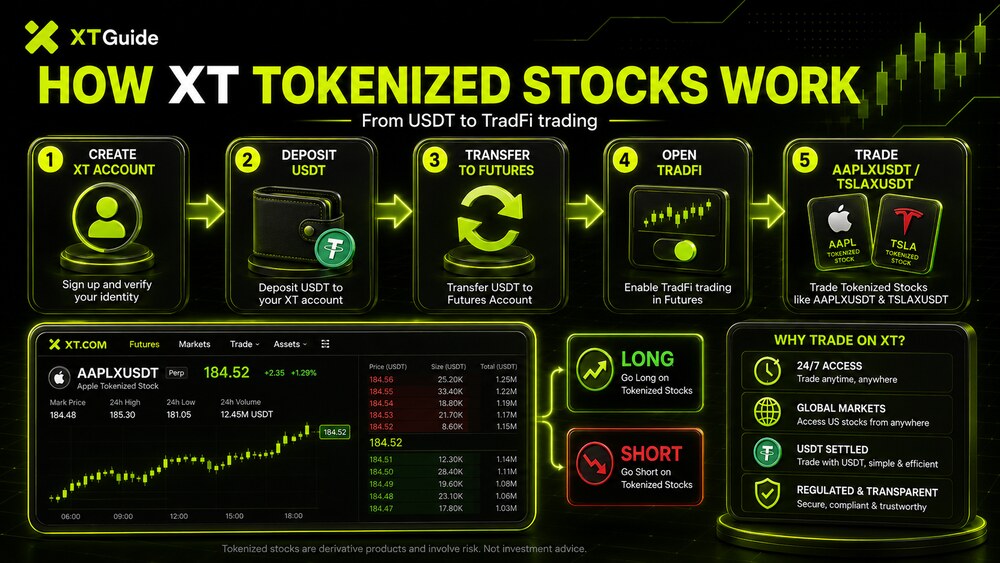
Step 1: Create an XT Account
The first step is opening an XT account.
New XTGuide readers can register through the dedicated invitation link.
XTGuide Referral Code: X T G U I D E
Register on XT through the XTGuide invitation link
Using the XTGuide referral route also gives eligible new users access to current promotional campaigns available through the partnership.
XTGuide’s current bonus guide covers rewards that can reach up to $38,000 depending on the campaign, trading volume and eligibility requirements. Promotions change regularly, so users should always check the current conditions rather than assuming every reward is guaranteed.
You can read the complete internal guide here:
XT Exchange Bonus 2026 – Up to $38,000 Rewards
Step 2: Complete the Required Verification
After registration, complete any account verification required for your account and the financial products you intend to use.
Access to TradFi products can depend on factors including:
country of residence, verification level, local regulation and derivatives eligibility.
Do not attempt to bypass geographical or compliance restrictions.
Step 3: Deposit USDT
Most XT equity-linked perpetual futures use USDT as collateral and settlement currency.
Open your XT account and go to:
Assets → Deposit → USDT
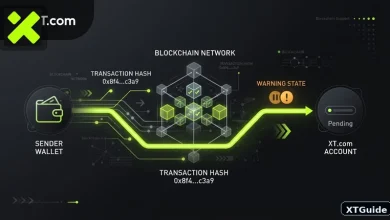
Choose the blockchain network you want to use and copy the corresponding deposit address.
Always make sure the network selected on the sending wallet or exchange matches the network selected on XT.
Step 4: Transfer USDT to Your Futures Account
Because contracts such as AAPLXUSDT and TSLAXUSDT are futures products, your trading balance needs to be available in the appropriate futures wallet.
Go to:
Assets → Transfer
Then move your USDT from your funding or spot balance to your USDT-M Futures account.
Step 5: Open the XT TradFi Zone
Navigate to:
Futures → USDT-M Futures → TradFi
Search for the stock-linked product you want.
For Tesla:
TSLAXUSDT
For Apple:
AAPLXUSDT
XT’s official 2026 guide specifically references these ticker-style contracts when explaining stock-linked trading on the platform.
Step 6: Choose Long or Short
One major difference between perpetual futures and simply buying traditional shares is that traders can speculate in both directions.
If you expect the underlying stock price to rise, you can open a:
Long position
If you expect it to fall, you can open a:
Short position
For example, a trader who expects Tesla to rally could open a TSLAXUSDT long position.
Another trader expecting Tesla to decline could use the same market to open a short position.
Step 7: Select Your Order Type
XT provides several familiar futures order types.
Market Order: executes close to the best currently available market price.
Limit Order: lets you specify the price at which you want the trade to execute.
Trigger Orders: can automatically open or close positions once predetermined conditions are reached.
Limit orders may be particularly useful when liquidity is lower or spreads are wider.
Can You Trade Tesla on XT?
Yes. Eligible XT users can access Tesla-linked price exposure through the TSLAXUSDT perpetual futures contract when the market is available.
Unlike purchasing TSLA through a traditional brokerage account, TSLAXUSDT allows traders to manage the position using USDT.
Traders can potentially:
go long, go short, use leverage, set stop-loss orders, set take-profit orders and manage Tesla-linked exposure alongside their cryptocurrency futures positions.
The important difference is that TSLAXUSDT is a derivative, not a direct Tesla share.
Can You Trade Apple on XT?
Apple-linked exposure is available through the AAPLXUSDT contract when supported.
The product is designed to follow the price of Apple while allowing eligible users to trade through XT’s crypto derivatives infrastructure.
Instead of transferring USD to a traditional brokerage account, crypto traders can use USDT collateral.
For anyone already familiar with markets such as BTCUSDT or ETHUSDT perpetual futures, the interface and trade-management process should feel familiar.
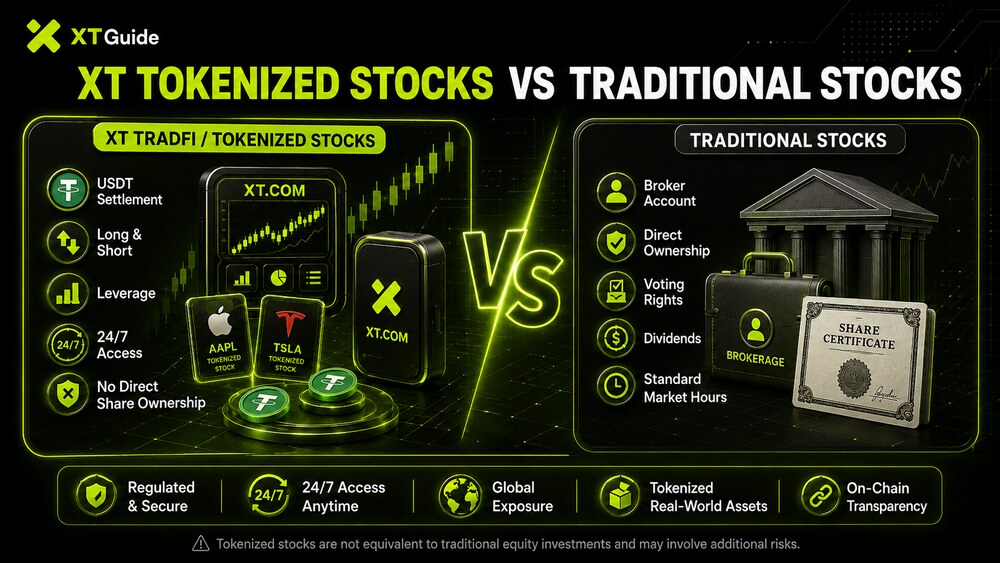
XT Tokenized Stocks vs Traditional Stocks
The differences between these two markets are important.
| Feature | XT Stock-Linked Futures | Traditional Stocks |
|---|---|---|
| Direct Share Ownership | No | Yes |
| Price Exposure | Yes | Yes |
| Settlement | USDT | Usually Fiat |
| Long Positions | Yes | Yes |
| Short Positions | Yes | Depends on brokerage |
| Leverage | Available | Depends on account |
| Voting Rights | No direct shareholder rights | Usually Yes |
| Traditional Dividend Rights | Not automatically | Yes, if declared |
| Funding Rate | May Apply | No |
| Liquidation Risk | Yes with leverage | Not for unleveraged shares |
| Brokerage Account | Not separately required | Required |
| Crypto Exchange Account | Required | Usually Not |
The main distinction is ownership.
A traditional Apple investor owns equity in Apple.
An AAPLXUSDT trader owns a position in a derivative linked to Apple.
XT itself emphasizes that tokenized or stock-linked exposure should not automatically be treated as equivalent to owning the underlying security.
Read XT’s Tokenized Stocks vs Traditional Stocks comparison
Can XT Stock-Linked Markets Be Traded 24/7?
One of the main attractions of crypto-based TradFi products is expanded trading availability.
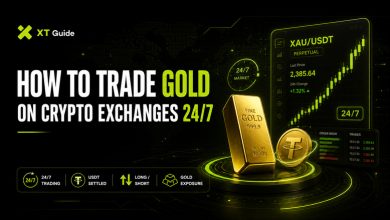
XT states that several equity-tracking perpetual contracts can trade around the clock, even when the traditional US stock market is closed.
That gives traders more flexibility to react to news outside normal Wall Street hours.
However, extended trading also creates additional risks.
When the underlying stock market is closed, liquidity may be lower, spreads may widen and price discovery may be less efficient.
A derivative contract can also temporarily move differently from the most recent underlying stock-market price.
For this reason, traders should pay close attention to mark price, index price, liquidity and spreads, particularly outside normal US trading hours.
XT Tokenized Stock Fees
The total cost of trading stock-linked perpetual futures involves more than just the trading fee.
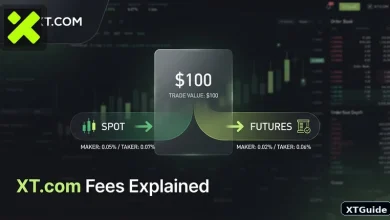
Trading Fees
Maker and taker fees may apply when opening and closing positions.
Your actual fee tier can depend on your XT VIP level and current fee schedule.
Funding Fees
Because products such as TSLAXUSDT are perpetual futures, funding payments may periodically be exchanged between long and short traders.
XT reported that TSLAXUSDT used a four-hour funding cycle in its June 2026 documentation, although funding intervals and rates can change by contract.
Bid-Ask Spread
The difference between buying and selling prices represents another trading cost.
Stock-linked contracts may experience wider spreads when the underlying stock market is closed or liquidity is lower.
Leverage Costs and Liquidation Risk
Using leverage increases exposure without requiring the full position value as margin.
That can increase potential returns, but it also increases potential losses and liquidation risk.
How Much Leverage Does XT Offer on Tokenized Stocks?
Maximum leverage differs between contracts.
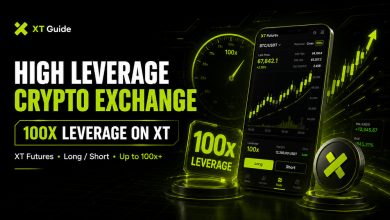
XT’s June 2026 documentation stated that contracts including TSLAXUSDT supported leverage of up to 10x in isolated margin mode at the time of publication.
This means $100 of margin at 10x leverage could control approximately $1,000 worth of market exposure.
But leverage magnifies losses just as quickly as it magnifies gains.
A relatively small unfavorable price movement can significantly reduce your margin or trigger liquidation.
Traders should therefore check the current leverage limit directly on the contract page before placing an order.
Advantages of Trading Tokenized Stocks on XT
One of XT TradFi’s main strengths is convenience for users who already operate inside the crypto ecosystem.
Traders can access stock-linked markets using USDT, take both bullish and bearish positions, use fractional position sizing and manage these markets alongside cryptocurrency futures.
The key potential benefits include:
- USDT settlement without first moving funds into a traditional brokerage account.
- Long and short trading within the same market.
- Leverage for experienced derivatives traders.
- Fractional position sizing rather than requiring exposure equivalent to an entire share.
- Extended trading availability compared with traditional US stock-market hours.
- One interface for crypto and traditional-market-linked derivatives.
This combination may be particularly attractive to traders who are already comfortable using perpetual futures.
Risks of XT Tokenized Stocks
Stock-linked perpetual futures also introduce risks that traditional long-term stock investors may not encounter.
Liquidation Risk
Leveraged positions can be liquidated if the market moves sufficiently against the trader.
Funding Risk
Holding a position for a long period can generate recurring funding costs.
Tracking Risk
The derivative price may not always match the underlying stock perfectly.
Liquidity Risk
Trading conditions can become thinner outside the underlying market’s normal hours.
Exchange Risk
Trades and balances are managed through centralized exchange infrastructure.
Regulatory Risk
Stock-linked products may be subject to different restrictions depending on the user’s jurisdiction.
The structure of tokenized stocks is still evolving globally, which makes reading the exact product rules especially important. The SEC has also emphasized that different tokenized securities can provide very different legal rights depending on their structure.
Is XT Good for Tokenized Stock Trading?
XT’s TradFi expansion makes the exchange particularly interesting for crypto traders who want exposure beyond cryptocurrencies.
Instead of opening a completely separate trading setup for US equities, eligible users can access stock-linked contracts directly through the XT futures environment.
The basic workflow is simple:
USDT → Futures Account → TradFi → Select Contract → Long or Short
For active traders, the combination of USDT settlement, leverage, short selling and extended trading hours can be attractive.
However, these products are better suited to users who understand derivatives.
Someone whose primary objective is to become a direct Apple, Tesla or Nvidia shareholder may still prefer a traditional securities brokerage.
Someone who wants price exposure and futures-style trading tools, however, may find XT TradFi more suitable.
How to Register on XT and Access XTGuide Rewards
If you want to explore XT TradFi, make sure you register through the XTGuide referral route before creating your account.
Referral Code: XTGUIDE
Register on XT with the XTGuide Referral Code
Depending on the active campaign and eligibility requirements, new XTGuide users may qualify for rewards related to account registration, first deposits, futures trading and trading-volume milestones.
XTGuide’s current bonus page advertises reward opportunities reaching up to $38,000, although individual rewards require specific conditions and promotional terms can change.
Before registering, check the complete campaign conditions here:
Read the XT Exchange Bonus 2026 Guide
Using the invitation link during registration is important because referral relationships may not always be attachable to an account after registration has already been completed.
Frequently Asked Questions
Does XT Have Tokenized Stocks?
XT offers selected equity-linked markets through its TradFi ecosystem. Several products are structured as USDT-M perpetual futures that track publicly listed equities.
Can I Trade Tesla on XT?
Yes, when available to your account and jurisdiction, Tesla-linked exposure can be traded through TSLAXUSDT.
Can I Trade Apple on XT?
Yes. XT’s documentation references AAPLXUSDT as an Apple-linked perpetual futures contract.
Do I Own Tesla Shares When Trading TSLAXUSDT?
No. TSLAXUSDT provides derivatives exposure to Tesla’s price and does not make you a direct Tesla shareholder.
Do I Own Apple Shares When Trading AAPLXUSDT?
No. AAPLXUSDT is an equity-linked derivative rather than direct ownership of Apple stock.
Can I Short Tesla or Apple on XT?
Yes. Futures contracts allow traders to take both long and short positions.
Can I Use Leverage?
Yes. Selected TradFi futures support leverage. The maximum available leverage varies by product.
Are XT Tokenized Stocks Available 24/7?
Several XT equity-tracking perpetual contracts trade around the clock, according to XT’s documentation. Liquidity and price behavior can still differ outside normal US stock-market hours.
What Currency Is Used?
Many XT TradFi perpetual futures use USDT for margin and settlement.
Are XT Tokenized Stocks Available in Every Country?
No. Availability can vary by jurisdiction, account eligibility and product restrictions.
What Is the XTGuide Referral Code?
The XTGuide referral code is:
XTGUIDE
New users should use the referral route during registration if they want to participate in eligible XTGuide promotional campaigns.
Final Verdict: Are XT Tokenized Stocks Worth Trading in 2026?
XT’s move into stock-linked TradFi markets is one of the more interesting developments on the exchange in 2026.
The ability to access price exposure to companies such as Tesla, Apple, Nvidia, Amazon and other US-listed businesses using USDT brings traditional-market trading into an environment that crypto users already understand.
For experienced futures traders, the advantages are clear: USDT settlement, long and short positions, leverage, fractional sizing and access beyond conventional US market hours.
But the most important point remains the product structure.
When you trade contracts such as TSLAXUSDT or AAPLXUSDT, you are not buying ordinary Tesla or Apple shares.
You are trading equity-tracking perpetual derivatives.
That distinction affects ownership rights, dividends, voting rights, funding fees, leverage and liquidation risk.
Traders who understand those differences may find XT TradFi a useful addition to their existing crypto trading setup.
If you are opening a new account, register through the XTGuide invitation route so your referral relationship is applied from the beginning.
Register on XT through XTGuide
For the latest promotional conditions and rewards, also read:
XT Exchange Bonus 2026 – Complete XTGuide Guide